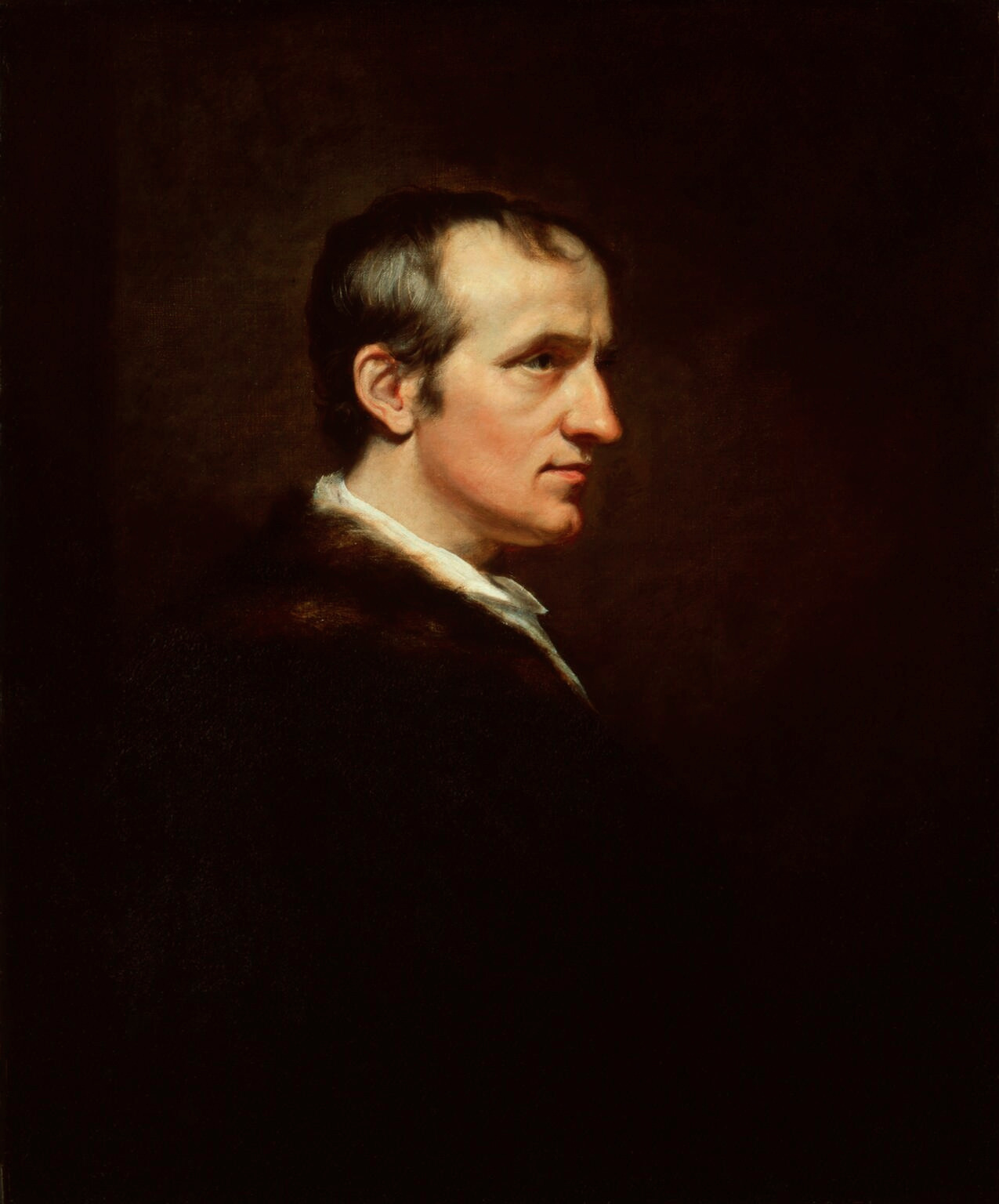
At Queen's University I studied some political theory, and spent a term thinking about William Godwin. He was married to feminist, Mary Wollstonecraft, and their daughter was Frankenstein author Mary Shelly. Overachiever.
At school, I was enthralled by his notion that "government by its very nature counteracts the improvement of original mind" - a thought that would have Godwin characterized as an early anarchist. He was writing at a time when the paint hadn't dried on representative democracy, and was full of ideas about forms that encourage truth and beauty. That old rub.
Govt 2.0 includes a web enabled surge of expectations, and the ability to concretely participate more effectively in our government. We are seeing decentralized governance in the deconstructed, modern workplace; the reformation of government can't be far behind.
As we begin to get more access to, and take responsibility for, our politics, cynicism is dealt a blow because government no longer has to be seen as something outside of us. This is a big change: the way we govern ourselves in private and in our neighbourhoods can, with tools for distributed governance, dovetail into broader involvement in political governance.
Government becomes less to do with influence peddling and more about empowered individuals: lots of them. I make friends with my neighbours; my conduct enables the cohesion or lack of cohesion of a self-forming neighbourhood group; we come agree on some fundamental issues (e.g. need a better way of removing snow on our steep hill), and we participate in the bigger community on this same issues using meetings and the open web; we see where our thoughts can fit into the reformation of the Official Community plan.
Because govt 2.0 isn't inherently oppositional, there is no antipathy to government - there is no anarchy. It's stable, and trustworthy...interesting to see that the people involved in the BOWEGOV project on Bowen Island are split, left and right leaning. The ooutcome is a tighter fabric, and more affordable one, because work, responsibility and reward are more evenly distributed.
John Godwin, Thomas Hobbes, Adam Smith, John Locke, - all those writers had a zeal for human potential, and political forms that would encourage an examined life. They were humanists. In much of the Govt 2.0 thinking there is a similar sensibility; it could be that web enablement has rekindled a kind of useful idealism. The culture of openness, fail safe, & distributed intelligence is changing the workplace. It may also be providing us with a base to realize the same root of compassion that gave 17th and 18th century political theory so much resonance.
- photo via Wikipedia.
Tuesday, May 26, 2009
Godwin 2.0

Tuesday, February 24, 2009
Why govt 2.0 is green.
Note on govt 2.0 as a green aesthetic.
Govt 2.0 is like web 2.0 - an aesthetic of mass enablement.
The notion of the City Hall building with its corinthian pillars and whatnot being = "government" melts down. Our mental association of govt changes: not pillars, but connectors.
Governance appears anywhere there is input and decision-making on the use of public space. In govt 2.0, that can be all over - policy making wikis, discussion groups, or in a physical place like neighborhood parties that are busy planting flowers. The place, appearance, and membership isn't static.
People have had church basement meetings, and translated action to City Hall for ever. But the difference with govt 2.0 is, City Hall may take more of a backseat in terms of decision making. The seat of power has to do with the way intelligence is aggregated. The form is not that place on 7th and Cambie. It is non persistent. This changes things.
This is connected to the jag: persistent forms are not green.
Sunday, December 21, 2008
Surowiecki Shirky and BOWEGOV
Clay Shirky's "Here Comes Everybody" provides some great input to our self governance effort. The book's observations are very bookmarkable - 'remarkable made reusable'... It builds on some of what James Surowiecki uncovered in 2004's Wisdom of Crowds.
James Surowiecki says distributed groups whose members aren't personally connected often generate better answers, as they pool both knowledge and intuitive wisdom without having to come to intrapersonal agreement. The k and iw are, as Peter Rawsthorne would say, 'tacit.'
Surowiecki recommended ( from the wikipedia entry):
* Keep your ties loose.
* Keep yourself exposed to as many diverse sources of information as possible.
* Make groups that range across hierarchies.
Chapter 11 of Shirky's book is called Promise, Tool, Bargain.
The Promise - is the basic WHY for joining and contributing to a social group. Linus Torvald got it right; others have too. A statement of intent that is neither daunting nor mundane, that satisfies a basic human need.
The Tool - What has to be satisfied is "Will I like using this tool" and "Will enough others be there, or use this, so that this thing succeeds?" There are slot of people using the Bowen Island Forum, but, Shirky says, smaller groups are better for convergent thinking. People seek agreement in smaller groups, and that is what they very good at. The Bowen Island Forum is arguably not a great tool for 'wisdom of crowds' self governance because it is about personal interaction.
The Bargain - The Bargain for Wikipedia was that the material created by writers could not be alienated from them - i.e. it couldn't belong to Wikipedia Inc.
BOWEGOV's tools are emergent, but we can think about what is the Bargain. Any thoughts?
Here's what I have on the Promise of BOWEGOV:
Exploring freedom in self governance
Seems the Open Source movement shares the same foundation as the Slow Food movement and the self governance movement.
The common foundation, platform: exploring the intrinsic value, the healthiness, the developmental benefit to feeding ourselves and our community, as opposed to being fed by a vendor or a government.
Chances are we will still rely on a municipal administration and elected officials and currency to get basic things - just like Slow Foodists usually dont mill their own flour. But we've gone overboard with the division of labor: industrialization of our food supply, the division of labor, and the professionalization of governance.
The really key things, like our meals, like what is going on in our backyard, like where our taxes go - these are too basic to give away.
Saturday, December 20, 2008

Friday, December 05, 2008
Saturday, November 29, 2008
Design for generosity
There are no experts. We all have a piece of the puzzle, so managing ways to bring these pieces together is a worthy task.
Part of the good design for governance on Bowen Island jag.
Entire Pop!Cast here
Thursday, November 27, 2008
Good governance tool?
Teaming up with Peter Rawsthorne today. Discussion boards abound, and they take on their own character. But this character isn't necessarily useful for governance and policy development. We're looking to engage in a participative good gov prototype for Bowen Island. What tool/s to use? Ivar has suggested www.redmine.org but there may be a more visually satisfying platform. Or maybe a series of platforms.
We imagine clouds of tagged content, with identifiable participants. For instance, for assisting a positive, sustainable hitchhiking culture on island, a good aim might be to
1) Create a cloud of post links and wiki pages tagged with bowen hitchhiking culture
2) Be able to pull out optimal content, with minimal noise for use in policy development.
We are less and less interested in the broadcast of expert opinion in social or other media. The primacy of expert artifacts gives way to the primacy of developmental process. We need social media enabled as a process for community use. Bowen has a lot of potential for this type of activity - politicized people with time. The question is, how?[added: Peter R will post on this too]
- image by Hugh McLeod at gapingvoid.com

Friday, May 02, 2008
Clay Shirky on Blip
On Cognitive surplus, from Blip.tv
Someone with relatively cheap tools has a better chance of carving out attention from humanity's "cognitive surplus" than ever before.
"media that targets you but does not include you [ and invite your participation on ] may not be worth sitting still for."
